What Is Glutinous Rice and How Do You Cook It? A Guide for Irish Shoppers
If you have eaten mango sticky rice at a Thai restaurant, bitten into Japanese mochi, or tasted Filipino rice cakes at a community gathering in Dublin, you have already met glutinous rice. It is one of the most used ingredients across Asian cooking and one of the least understood by Irish shoppers who did not grow up with it. This guide covers everything you need to know.
What Is Glutinous Rice?
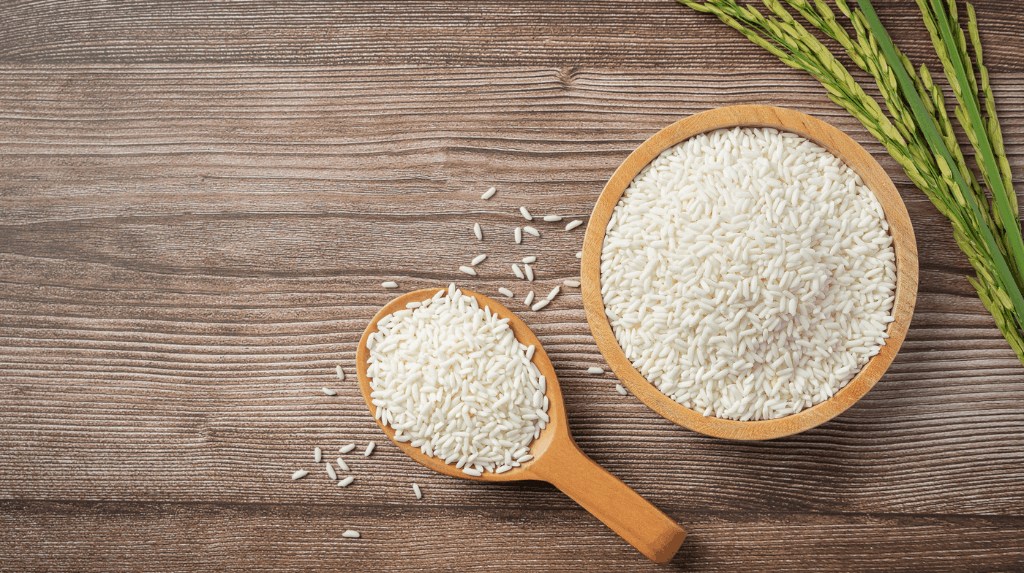
Glutinous rice is a variety of rice that becomes intensely sticky and chewy when cooked, due to its unique starch profile. All rice contains two types of starch: amylose and amylopectin. Regular white rice is roughly 20 to 25 percent amylose. Glutinous rice Ireland contains almost zero amylose, which means it is almost entirely amylopectin. Amylopectin is what creates stickiness. With virtually none of the counteracting amylose, glutinous rice becomes extraordinarily cohesive when cooked. Grains do not stay separate. They bind into a chewy, dense mass you can pick up by hand, roll into balls, or press into moulds.
The name ‘glutinous’ comes from the Latin word for glue, referring to its sticky texture. It has nothing to do with gluten the protein. Glutinous rice is completely gluten-free and safe for people with coeliac disease.
Glutinous Rice at a Glance
| Feature | Detail |
| Also Known As | Sticky rice, sweet rice, waxy rice |
| Origin | Southeast and East Asia |
| Grain | Short to medium, opaque white when raw |
| Cooked Texture | Very sticky, chewy, dense and cohesive |
| Gluten Content | Zero (100% gluten-free despite the name) |
| Glycemic Index | High (higher than basmati or Sona Masoori) |
| Calories (100g dry) | Approx. 370 kcal |
| Best Uses | Mango sticky rice, mochi, zongzi, rice cakes, dim sum, Lao daily rice |
| Cooking Method | Soak first, then steam or boil |
How It Differs from Regular and Jasmine Rice
| Feature | Glutinous Rice | Jasmine Rice | Regular White Rice |
| Texture | Very sticky and chewy | Soft, moist | Fluffy, separate |
| Amylose | Near zero (very waxy) | About 15% | 20 to 25% |
| Aroma | Mild, subtly sweet | Floral, popcorn | Neutral |
| Gluten-Free | Yes | Yes | Yes |
| Calories/100g | Approx. 370 kcal | Approx. 365 kcal | Approx. 360 kcal |
| Best Dishes | Desserts, rice cakes, dumplings | Thai curry, fried rice | Everyday side dish |
Glutinous rice is not a substitute for regular or jasmine rice. It is a specialist ingredient for specific dishes. Using it as an everyday dinner rice would give you a very unexpected result.
Where Is Glutinous Rice Ireland From?
Glutinous rice has been cultivated across Southeast and East Asia for thousands of years. In Laos, it is the everyday staple grain eaten at every meal, not just for desserts. It is steamed in bamboo baskets and eaten by hand alongside grilled meats and dipping sauces. In Northern and Northeastern Thailand (the Isan region), it plays the same daily role. In China it is used for zongzi dumplings and dim sum preparations. In Japan it is the base for mochi. In the Philippines it underpins the entire kakanin (native rice cake) tradition, and in Vietnam it appears in xoi, banh chung, and various festival dishes.
How to Cook Glutinous Rice
Step One: Always Soak First
Glutinous rice must be soaked before cooking. The dense waxy grains need time to absorb water before heat is applied. Skipping this step results in gluey outsides and chalky centres.
- For steaming: soak at least 4 hours, overnight is best
- For boiling: soak at least 30 minutes
- Use cold or room temperature water, then drain well before cooking
Method 1: Steaming (Best Results)
- Soak overnight. Drain well.
- Line a steamer basket with a damp muslin cloth. Spread rice in a layer no deeper than 5 cm.
- Steam over boiling water for 20 to 25 minutes. At the halfway point, flip the rice so the bottom layer moves to the top.
- The rice is ready when fully translucent, sticky, and tender with no chalky centre.
Method 2: Boiling
- Soak for at least 30 minutes. Drain.
- Use a 1:1.5 ratio of rice to water (less than regular rice as the grains are already hydrated from soaking).
- Bring to a boil, reduce to lowest heat, cover tightly and cook for 15 minutes.
- Remove from heat and rest covered for 10 minutes before serving.
Method 3: Rice Cooker
- Soak for at least 2 hours. Drain.
- Add to the rice cooker with a 1:1.25 ratio of water.
- Press cook. Leave on warm for 10 minutes after it clicks before opening.
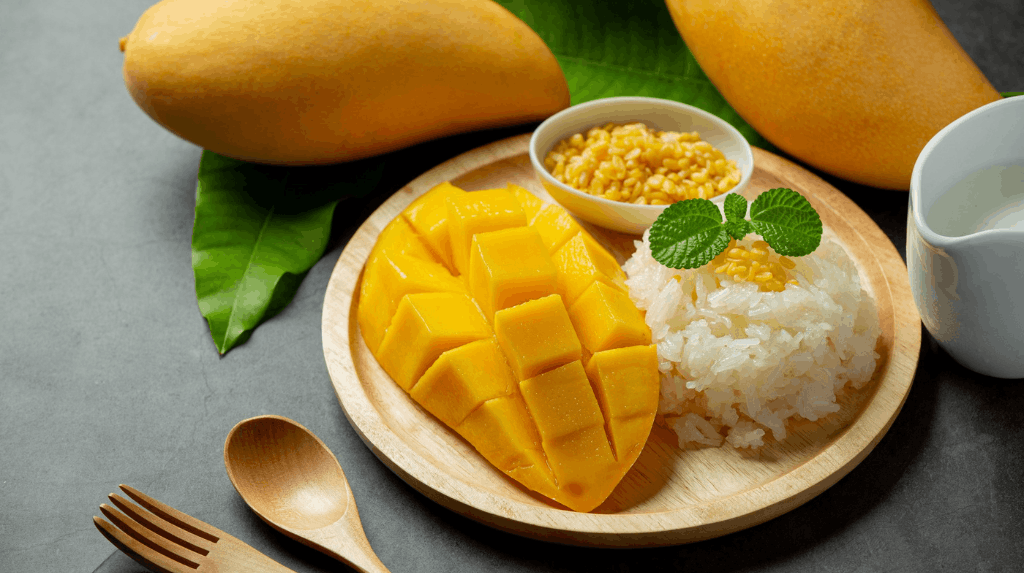
For mango sticky rice: steam first, then mix the hot cooked rice with warm sweetened coconut milk (200ml coconut milk, 2 tbsp sugar, pinch of salt) and leave to absorb for 10 minutes before serving with fresh mango.
What Can You Cook with Glutinous Rice?
- Mango Sticky Rice (khao niao mamuang): the classic Thai dessert of coconut-soaked sticky rice with fresh mango
- Lao Steamed Sticky Rice (khao niao): the everyday staple of Laos and Isan Thailand, eaten by hand with grilled meats and dipping sauces
- Chinese Zongzi: glutinous rice packed with savoury or sweet fillings and wrapped in bamboo leaves before steaming
- Japanese Mochi: pounded glutinous rice formed into elastic, chewy dough cakes filled with red bean paste or other fillings
- Filipino Kakanin: a broad family of native rice cakes including biko, suman, and palitaw, all built on glutinous rice
- Vietnamese Xoi: steamed sticky rice topped with savoury or sweet toppings including mung bean, sesame, and shredded pork
- Korean Tteokbokki: cylindrical rice cakes made from glutinous rice, stir-fried in spicy gochujang sauce
- Coconut Sticky Rice with Black Beans or Taro: a simple Southeast Asian dessert cooked in sweetened coconut milk with pandan
Key Tips to Avoid Common Mistakes
- Always soak before cooking. This is the most common mistake Irish cooks make when trying glutinous rice for the first time.
- Use less water when boiling. A 1:1.5 ratio, not the standard 1:2 used for regular rice.
- Keep it covered until serving. Glutinous rice hardens quickly as it cools. A damp cloth or lid keeps it soft and pliable.
- Glutinous rice flour is a different product. It is ground from glutinous rice and used for mochi dough and coatings, not as a substitute for whole grains.
Where to Buy Glutinous Rice Ireland Dublin
Glutinous rice is not stocked in mainstream Irish supermarkets. Asian House is one of the most accessible places in Dublin to buy it.
| Product | Size | Price |
| Little Angel Glutinous Rice | 1 kg | EUR 2.95 |
| Little Angel Glutinous Rice | 2 kg | EUR 5.45 |
Little Angel Glutinous Rice is a trusted Southeast Asian brand suitable for all the dishes in this guide including mango sticky rice, Lao steamed sticky rice dublin, and rice cake preparations. Both sizes are available in-store and online at asianhouse.ie.
Visit us: 71 Belmayne Ave, Belmayne, Dublin 13, D13 W7PR
Phone: (01) 829 6460 Mobile: (089) 9660503
Email: asianhouse.ie@gmail.com
Click and Collect: 149 Phibsborough Rd, Dublin 7, D07X033 (collection 2pm to 9pm)
Delivery: 2pm to 10pm daily. Orders after 12pm delivered next working day. See asianhouse.ie for full delivery policy.
Frequently Asked Questions
Does glutinous rice contain gluten?
No. It is completely gluten-free. The name refers to its glue-like sticky texture, not to gluten the protein.
Is sticky rice the same as glutinous rice?
Yes. Sticky rice, sweet rice, waxy rice and glutinous rice are all the same product: Oryza sativa var. glutinosa.
Do I have to soak it before cooking?
Yes. Soak for at least 4 hours before steaming, or 30 minutes before boiling. Skipping this step causes uneven cooking.
Can I use it instead of regular rice for everyday meals?
It is not recommended as a daily rice substitute. It is much stickier and denser than regular rice, has a higher glycemic index, and is best used as a specialist ingredient for specific Asian dishes.